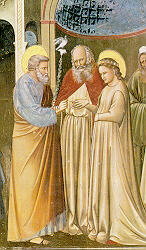


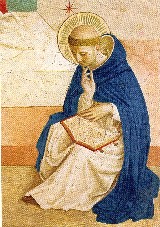
under the patronage of St Joseph and St Dominic
By the rivers of Babylon there
we sat and wept, remembering Zion;
on the poplars that grew there we hung up our harps. . . Ps 136
|
under the patronage of St Joseph and St Dominic By the rivers of Babylon there
we sat and wept, remembering Zion; |
|
|
In 1962, just prior to the synod of bishops in Rome denominated by John XXIII a ‘Second Vatican Council’, a book appeared with the title The Plot Against The Church authored, allegedly, by a group of clerics from Mexico under the pseudonym ‘Maurice Pinay’. Its purpose, according to its authors, was to counter movements detected among the senior clergy which sought to reconcile the Church with the cult of Freemasonry and to soften or remove her opposition to atheistic Communism. When one studies the history of Angelo Cardinal Roncalli the man who, as Pope John XXIII, summoned that synod, and the influence he exercised over fellow cardinals, bishops and priests in favour of those two aberrations, one can see that the expressed concerns were justified.[1]
However, the book was not so much directed at these aberrations as at those the authors considered responsible for them, members of the Jewish race. The book’s burden was that the Jews are irredeemable enemies of Christ and His Church and deserve to be condemned simply because they are Jews. ____________________________
The Catholic Church’s attitude to the Jewish race needs careful consideration and the application of a number of distinctions.
First, the Church has maintained since her inception, and will ever maintain, that the Jewish people brought about the death of the God-Man Jesus Christ.[2] Her position is encapsulated in the readings in the Office of Matins for Good Friday and Holy Saturday with its citations from St Augustine’s Commentary on verses in Psalms 54 and 63.[3]
Time and again, as one peruses the texts of the Gospel to weigh the attitude of the Jews to Christ one sees the bloody-mindedness of their leaders. St Thomas teaches in the Contra Gentes that a visible action which can only be divine reveals an invisibly inspired teacher of truth.[4] But the miracles which Christ performed, actions which could only be divine, cut no ice with the Jewish leaders. They would not allow that the promised Messiah would do other than conform with their prejudices. After they had contrived, not merely Christ’s death, but His torture through crucifixion at the hands of the Romans, they mocked Him as He hung transfixed: “He saved others but cannot save himself. If he be the King of Israel, let him come down from the cross and we will believe in him. He trusted in God: let Him now deliver him if He will have him; for he said ‘I am the Son of God’.” Implicit in this is the Jewish leaders’ presumption that the Almighty shared their view of the man whose death they had contrived, even to the point of challenging God to prove them wrong: a mighty presumption! They were aware Christ had promised He would rise from the dead within three days and secured a guard of Roman soldiers over the sepulchre in anticipation. The soldiers, struck with terror at the appearance of the angel who rolled back the stone at its mouth, became as dead men. Some went later to the Chief Priests and told them what had happened. And still, in the face of this sign which could only be divine, they persisted in rejecting God!
They took counsel with their peers and bribed the guards ‘with a great sum’ to say that the disciples had come by night and taken away Christ’s body while they were asleep, a tale mocked by St Augustine for its irrationality. How could they know this had happened if they had been asleep! The words Our Lord had placed in the mouth of Abraham in the parable of Dives and Lazarus (Luke 16: 31) were realised in their attitude: “If they will not heed Moses and the prophets, they will not believe even if one rises from the dead.”
Yet this stiff-necked attitude did not, nor does it presently, impede conversion of individual Jews to the truth, even to the point of martyrdom, as Saul of Tarsus demonstrated. As he later wrote: “And so, while the Jews demand miracles and the Greeks look for wisdom, here we are preaching a crucified Christ; to the Jews an obstacle they cannot get over, to the pagans, madness; but to those who have been called, whether Jews or Greeks, a Christ who is the power and the wisdom of God. For God’s foolishness is wiser than human wisdom, and God’s weakness is stronger than human strength.”[5]
Second, notwithstanding its stand on this issue, the Church has ever cited St Paul’s lament in Romans 9 for his own nation and how he would willingly be doomed to separation from Christ if that would save his brethren— “who are Israelites, to whom belong the adoption as of children, and the glory, and the testament, and the giving of the law, and the service of God, and the promises…” (Romans 9: 4) God made all men in His own image and likeness including Jews. His Will is salvific towards all men, and Jews are not excluded from that promise just because they are Jews. _________________________
The first defect in The Plot’s argument is its preoccupation with one cause, the efficient cause, of the harm the world and the Catholic Church is suffering - has suffered - since Christ’s Resurrection, at the expense of the other three causes – final, formal and material. The text singles out those who have inflicted evil on the world through Communism, that is, through the practical application of Marx’s philosophy of dialectical materialism, and identifies them as exclusively Jews, a proposition which is fundamentally flawed.
Marx may have been a Jew but it was his defective philosophical vision, rather than his race, that drove him; that and his entrenched ill-will towards his fellow-man. Let the reader read the character study by English historian and commentator, Paul Johnson, in his Intellectuals and he will see just how malevolent an individual Marx was, not only to enemies, but to his family and friends.[6] Moreover, the errors he propagated do not derive from Judaism but from the negation of Catholic principle at the hands of those of the Church’s members who revolted against God and His rule in the sixteenth century. The harm these renegade Catholics put in place was far greater than the harm any Jew could have achieved - corruptio optimi pessima. The formal and final causes of the harm encapsulated in Marx’s philosophy derive, ultimately, from the hatred of God initiated by Martin Luther and Henry Tudor (Henry VIII) and carried into effect by their acolytes. For the theological error these two committed (and in Henry Tudor’s case enforced by systematic violence) produced inevitable philosophical error. God is the author of reality. Reject God and you reject the essential, the formal and constitutive, element in the reality He created, and are left with the merely material. The loss of vision the Protestant revolt produced led to the empiricism of Francis Bacon (1561 – 1626) according to whom there exists no reality beyond what the senses reveal. This defective vision grounds the atheism to which Protestantism tends, the worst of sins, as St Thomas labels it, a vice far more grievous than the now superseded, and false, religion of Judaism.
Since materialism can never adequately explain reality, it needed another thesis to support it. This came from Luther’s elevation of personal belief to a logical principle. ‘Not what God says,’ he insisted, ‘but what I say’. This reduced to, ‘not what God commands me to believe, but what I choose to believe’. This error, translated into philosophical thought, was expressed in Descartes’ cogito ergo sum which turned logical truth on its head. No longer was truth the identity of what is asserted with what is; now it was the identity of what is with what is asserted. This is the genesis of the subjectivism whose effects ravage modern civilisation, and which currently ravage the members of Christ’s Church through the poison of Modernism, the synthesis of all heresies. No Jew was responsible for this immense evil.
After the Protestant revolt, the philosophically inclined began, each of them, to advance his own idea as most fitting in the interpretation of reality—Bacon’s thesis is a typical instance. Through the hands of successive materialist and subjectivist thinkers, the twin ideas developed. On the materialist side these included Locke, Hume, Berkeley and Spencer (whose theory of ‘evolution’, a mode of material progress, was adopted by Darwin). On the subjectivist side they included Descartes, Kant, Fichte, Schelling and Hegel. Inevitably, the two streams converged, fed on each other, and produced such chaotic philosophies as those of Schopenhauer – who postulated a blind ‘Will’ driving the universe, and Nietzsche - who denied objective truth, asserted that God was dead, and maintained that the force driving humanity is a ‘will to power’.[7] Marx borrowed Hegel’s ideas, notably his hypothesis of thesis opposed by antithesis resulting in synthesis. This, like Spencer’s idea, was simply another attempt to explain progress in merely material terms. _____________________
Catholicism has ever insisted that love of one’s fellow, however different he may be, is essential to human nature, for God created every man, in love, in His own image and likeness (Genesis 1: 26-7). True to the rebels’ rejection of God, His works and the loving order He had instituted in creation, the developments they had precipitated embraced the common thesis that conflict is essential to human nature. The practical application of such mindless antipathy may be seen in the conduct of members of the German nation, heirs of the appalling Luther, which resulted in two world wars.[8] This ‘philosophical truth’ provided them with excuses to invade their Belgian neighbours in 1914 and their Polish neighbours in 1939. The result, in each case, was the spread of appalling physical evils leading, ultimately and inevitably, to the destruction of a great numbers of the German nation.
The second defect in The Plot’s argument is its ascription to the Jewish people of the evil of Freemasonry. Freemasonry is a consequence of the means used to enforce the Protestant revolt in the realm of England. Its essence is the mockery of God to His face expressed in the cult’s requirement of its neophytes that they commit serial breaches of the First and Second Commandments as a condition of admission to membership. The use of false oaths was instituted by Henry VIII’s creature, Thomas Cromwell, to aid entrenchment of the King’s tyranny over his people. The founders of the Masonic cult, Deists, adopted the device of false swearing as they sought to replace the God of Heaven and Earth with a ‘God’ of their own contriving.
It may well be that, driven by their hatred of Christianity, Jews involved themselves in the evil undertakings of each of these evil movements, but they exercised no influence in the establishment of the final or formal causes of either. The suggestion that all blame can be sheeted home to those of the Jewish race is both misguided and reprehensible. It bears all the marks of a mob looking for a scapegoat on which to lay the blame for its members own sins.
Before proceeding further, we should make it clear that the chief evil confronting Christ’s Holy Church is not - has never been - the Jews, with their idiosyncratic religious views, but the heresies of the Church’s own members. Currently, this evil is the heresy identified by Pius X as ‘the synthesis of all heresies’, Modernism. The heresy is a consequence of the evils committed five hundred years ago by the Church’s renegade members, passed into the field of philosophy via a sequence which culminated in Hegel’s Idealism, so as to confuse mental being with real being. This confusion, adopted by Catholics of indifferent intellectual ability,[9] undermined the reality of the God Who created them and invested them with the divine gift of the Catholic faith, in favour of a preconception that God and their faith are nothing but contrivances of their own consciousness!
At the turn of the 20th century there developed among the Jewish people a movement to establish a permanent home in Palestine. In January 1904, the founder of the movement, Theodor Herzl, approached Pius X’s secretary of state, Rafael Cardinal Merry del Val, and was subsequently received in audience by the Pope. The report of the interchange between them in January 1904 is reproduced in Roberto de Mattei’s recent biography of Cardinal Merry del Val. (The material quoted is from Herzl’s diary.) It deserves to be set out in extenso. Herzl told [the Cardinal] that he was in Rome to obtain “the benevolence” of the Holy See towards his cause adding that in his project the Holy Sites would remain extra-territorial… Herzl reports that Merry del Val replied that he could not see how the Holy See could have taken any initiative in this field: “As long as the Jews deny the divinity of Christ, we cannot declare ourselves in their favour. We are not ill-disposed towards them. On the contrary, the Church has always taken them under its protection. For us, they are the necessary witnesses to the event of the Presence of God on earth. But they deny the divinity of Christ. Now, how can we declare to consent that they return to possess the Holy Land without sacrificing our supreme principles?” On January 25th, Herzl was received by Pius X. Their meeting, also reported in Herzl’s diary, had as its outcome a polite, though firm, rejection by the pontiff to support the Zionist movement’s objectives. Pius X confirmed what his secretary of state has already expressed: “We cannot promote this movement. We cannot hinder the Jews from going to Jerusalem, but to promote it we also never could do. The land of Jerusalem, if it were not always holy, was sanctified through the life of Jesus Christ… I, as head of the Church, cannot tell you otherwise. The Jews have not recognised Our Lord, thus we cannot recognise the Jewish people.”[10]
Pope Pius XII was accused, long after the end of World War II, of being antisemitic. The truth was that he laboured extensively to secure the safety of Italian Jews sought for extermination by the Italian Fascist and German National Socialist governments. The charity of the Pope shown in his efforts for the Jews of Italy was such that the former chief Rabbi of Rome, Israël Zolli, converted to Catholicism in 1945 and took as his baptismal names the Pope’s Christian names, Eugenio Maria. ________________________
God’s will is salvific for all men. In the Prologue to his Gospel, St John spells out the reality: “the Word through Whom all things were made… was the Light who enlightens each man who comes into the world” - Omnia per Ipsum fact sunt et sine ipso factum est nihil quod factum est… erat Lux vera quae illuminet omnem hominem venientem in hunc mundum – Every man, Jew, Muslim, Catholic, Hindu, Buddhist… white, black, yellow, red… whatever his creed, whatever his colour, was made in God’s image and likeness; an immaterial being proportioned to a material body; given the objectively infinite power of intellect, a participation in Intellect Its Very Self, Who is God.[11] Each man is, for this reason, an end in himself, to be used as a means by no one, and who, in imitation of his Creator, will live forever.
Despite the atheistic hubris into which modern man has descended through the rebellion of those God had favoured with membership of His Catholic Church, man’s natural inclination is to defer to the One on Whom, in his bones he knows he is utterly dependent, the One without Whom he can do nothing (John 15: 5).
It is essential to grasp the distinction between objective and subjective. Objectively, for a man to attain his salvation and share the life of God as Christ, His Son, promised, he must become a member of Christ’s Church and submit himself to her demands which are ordered to his temporal and eternal welfare. Those who do not, whatever the reason they are impeded from doing so, are in God’s hands. There is no certainty of salvation for them if they resist the call Christ made, and makes, to them to turn to Him.
Michael Baker August 15th, 2026—The Assumption of the Blessed Virgin
[1] The authors might also, although they do not mention it, have been concerned over Papa Roncalli’s abandonment of the Church’s traditional attitude of antipathy towards the Jewish people in favour of one which embraced them. [2] Note: we are not referring to the attitude of the Church of Vatican II whose ‘officers’ rule the roost in the Vatican today conforming to the Modernist craic expostulated in the ‘document’ Nostra Aetate (October 28th, 1965). [3] We cede no authority to Paul VI over the liturgical aberrations he orchestrated in the face of the Church’s explicit monitum against doing so in Canon 13 of the Seventh Session of the Council of Trent (March 3rd, 1547), reinforced by Pius V’s bull canonising the form of Mass in the Roman Rite, Quo primum (July 14th, 1570). Nor do we concede John XXIII’s authority to emasculate the texts of the Divine Office to accommodate his personal sympathy for the Jewish nation in response to the oppression its members suffered at the hands of the Nazis in World War II. [4] Summa Contra Gentiles Bk. I, ch. 6 n. 4. [5] I Corinthians 1: 22 et seq. The Jerusalem Bible’s somewhat florid translation of the Latin Vulgate is, nonetheless, splendid in its oratory. [6] Intellectuals, London (Weidenfeld & Nicolson) 1988; my copy Phoenix reprint, 1996. Ch. 3, Karl Marx: ‘Howling Gigantic Curses’. [7] Both aberrations positing an effect without a cause. [8] It did not precipitate the First World War. That was the murder by the Serb Gavrilo Princip of the Archduke Franz Ferdinand. [9] Notably Fr George Tyrrell SJ, a former Anglican, and the Abbé Alfred Loisy. [10] Roberto de Mattei, A Cardinal for the Ages: Merry del Val and His Enduring Influence on The Church, Manchester NH (Sophia Institute), 2026, pp. 150-151. [11] The greatest of the pagan philosophers, Aristotle, remarked of its power of becoming the things it knows in their very quiddities: The least degree of intellect in one is greater than the whole of the rest of material being. |
 PDF
PDF