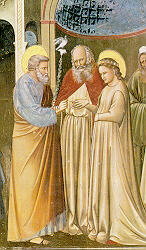


under the patronage of St Joseph and St Dominic
By the rivers of Babylon there
we sat and wept, remembering Zion;
on the poplars that grew there we hung up our harps. . . Ps 136
|
under the patronage of St Joseph and St Dominic By the rivers of Babylon there
we sat and wept, remembering Zion; |
|
|
SEVEN MODERNIST POPES Download this document as a
The Catholic Church concerns herself solely with objective facts, not with the state of the soul which is known only to God and to the individual. De interniis Ecclesia non iudicat – the Church does not judge of internal things. Pope Pius X states the principle in a preamble to his encyclical Pascendi Dominici Gregis (September 8th, 1907) condemning the Modernist heresy and its adherents: “Although they express their astonishment that We should number them among the enemies of the Church, no one will be reasonably surprised that We should do so if, leaving out of account the internal dispositions of the soul – of which God alone is the Judge – he considers their tenets, their manner of speech, and their actions…” n. 3[1] In like fashion, in what follows we not offer judgements on the souls of the Popes mentioned but on the realities their words and actions reveal. _______________________
The Modernist heresy arose late in the 19th century as a consequence of the spread of modern philosophy. We have spelt out its provenance and development elsewhere and the reader is invited to study that material.[2]
The heresy’s influence among the priesthood and episcopacy of the Catholic Church in the twentieth and twenty first centuries is incrementally worse than was the influence of the Arian heresy in the fourth. There never was an Arian pope. As we will show, to date the Church has had six - putatively seven - popes infected with the Modernist virus. Arianism was not banished from the Catholic Church for three centuries. In the absence of divine intervention, Modernism bids fair to beat that record by a substantial margin.
March 2026—and, despite overwhelming evidence to the contrary, the Catholic Church continues in the Vatican. Since the completion of the ersatz council known as ‘Vatican II’, however, her activities have been trammeled by the novel secular entity the bishops of that ‘Council’ invented, the Church of Vatican II. Hard at work (as they thought) reinventing the Catholic Church, the result of their efforts was the production of a counterfeit. For the Catholic Church is a divine thing, not susceptible to reinvention. And, just as the ersatz council which gave it birth was infected with the Modernist virus, so is the counterfeit they produced, a human, and diabolical entity. So, while the Catholic Church occupies the Vatican, the counterfeit attends her, stifling her operations and diverting them to worldly ends at every turn.
Very great wisdom is required to resolve the complexities that have resulted from the Modernist revolution, complexities that surround Christ’s Church and compromise her divine mission. Let us recall Our Lord’s words— “There will arise false Christs… false prophets… and shall show signs and wonders so as to deceive even the elect, if that were possible…” (Matt. 24: 24; Mark 13: 22) They can only be resolved if one follows the advice, frequently reiterated, of the Church’s Common Doctor, St Thomas Aquinas, as he appealed to the formal in things – Distinguendam est – ‘It is necessary to distinguish’. We will now proceed to put this advice into practice.
Past & Present Each of the Popes after Pius XII – from John XXIII to Leo XIV - has adhered to the Modernist aberration, but in his own fashion. Each of them – save, as we will show, for the ‘reign’ of ‘Pope Francis’, has headed both entities, the Divine and the human - the Catholic Church and the Church of Vatican II - and each, in breach of the oath that attaches to the Sacred Office, has preferred the earthly entity to the Divine.[3] Let us repeat: we are not judging whether each of them wanted to breach his oath. We set forth facts which show that he did.
John XXIII Angelo Roncalli’s heterodoxy was patent long before his election.[4] That the Church’s cardinals should have chosen one so demonstrably deficient to be Christ’s Vicar demonstrated, as nothing else might, how justified were Pius XII’s concerns about their orthodoxy. Their choice demonstrates, too, the assertion of theologian and canon lawyer, the late Fr Gregory Hesse, that, notwithstanding appearances, by 1958 the episcopacy and clergy of the Church were rotten. Roncalli is, we have argued, the first of the two popes identified by Our Blessed Lady to the children of La Salette in the 19th century), who would be ‘worm-ridden’.[5]
Roncalli had long favoured Communism and Communists, had had dealings with Freemasons—may even have been a Mason himself. He had, in addition, encouraged Modernists who experimented with the Church’s liturgy such as Dom Lambert Beauduin. Roncalli had thought nothing of his predecessors’ condemnations of these ideologies or their exponents. His heretical character is most manifest in his objection to Pius XII’s definition of the Assumption of the Blessed Virgin. This Protestant antipathy to Our Blessed Lady, adopted by Modernists, was to colour the attitude of a majority of the ersatz council’s bishops towards her.
In discussions with those outside the Church, Roncalli was wont to say that we should focus “more on that which unites us rather than that which draws us apart”, an expression condemned by the Holy Office in 1949 for encouraging a dangerous indifferentism.[6] It was slogan and, like all slogans, partly true and partly false. His use of it without qualification signified rebellion over the Church’s teaching against communicatio in sacris with non-Catholic entities, and his embrace of the movement which came to be called ‘ecumenical’. The term ‘ecumenical’, be it noted, is used by the Church to signify (by reference to its meaning in the original Greek) “the household of the Church”. It was hijacked around 1900 by Protestants and its meaning altered.[7] Members of the Modernist putsch embraced it, enlarging the Protestant rendition to signify embrace of the religious indifferentism Christ’s Church has ever condemned. The distorted meaning was adopted uncritically by the bishops of ‘the Council’. The slogan was to be adopted, as we shall see, by Roncalli’s successors.
Paul VI The misgivings Pius XII had expressed over the disobedience of his former substitute for ordinary affairs in the Secretariat of State, Giovanni Batista Montini, were grounded in knowledge relayed to him of Montini’s perfidy.[8] There is little doubt Masonic traitors among the bishops seized on his misbehaviour to control him. “The extremes meet,” as the French saying has it, and Masonry and Modernism meeting in Montini rendered him fit to be the second of the popes Our Lady had named ‘worm-ridden’ in her appearance to the children at La Salette.[9]
Montini’s first, and programmatic, encyclical Ecclesiam Suam (August 6th, 1964), was a pean in praise of the works of the bishops of the ersatz ecumenical council then in progress. He used the Modernist buzz-words ‘consciousness’ and ‘conscience’ repeatedly in relation to the Church and endorsed, via its analogate ‘dialogue’, the new, Modernist meaning of the term ‘ecumenism’ some sixty-seven times. In n. 109 he adopted his predecessor’s slogan in respect of dealings with non-Catholics: “The principle that we are happy to make our own is this: Let us stress what we have in common rather than what divides us…”
If it be objected that Montini showed adherence to Catholic principle in Humanae Vitae, this does no more than demonstrate that no matter how corrupt its tenant, the Office of Vicar of Christ will not lack the guarantee of Divine assistance set forth by the Vatican Council.[10] That Montini should have sullied his teaching with defective detail when he endorsed the Protestant, not the Catholic, protocol on the ends of marriage only proves the Divine assistance does not necessarily extend to its mode of expression.[11]
John Paul It may be thought that there is little to show the short-lived Papa Luciani’s Modernism. But the deference he showed his two Modernist predecessors—endorsing, therefore, their defective vision—by invoking their names in the double-barreled title he chose ought to suffice.
John Paul II Pope John Paul II’s long papacy was chaotic, a litany of errors in teaching and in practice which confused the Catholic faithful at every turn. To name but three, there was his breach of the Church’s 1900-year-long condemnation of communicatio in sacris and religious syncretism at the World Day of Prayer for Peace at Assisi in 1988; his kissing of the Muslim ‘holy book’, the blasphemous Quran, in 1999; and his acts of ‘reconciliation’ with the Jews where he publicly rejected the Church’s teaching that God had revoked His covenant with the Jews.
Yet for all his incompetence, there abode in Papa Woytyla something honest. His appeals to tradition would have been admirable were it not that the ‘tradition’ to which he appealed was the Modernist version in Dei Verbum n. 8, rather the Church’s Tradition. His devotion to the Blessed Virgin, exemplified in his papal motto, Totus Tuus, may have saved his soul despite his repeated indulgence in teachings which were at least materially heretical. There can be little doubt Our Lady intervened to prevent his assassination by Mehmet Ali Agca on May 13th, 1981. His action of forgiving the assassin complied with Christ’s command to His followers.
One has to feel sorry for the young Karol Wojtyla over his philosophical formation. His teachers endeavoured, in breach of the Church’s specific directions, to marry the subjectivism of Emmanuel Kant with the objective thinking of St Thomas, an exercise akin to blending oil with water. What results is a gluggy mess, and this pretty well describes what passed for rational thought in Wojtyla’s mind throughout his life. He was notorious for his fetish in favour of feminist ideology, a corollary of Marx’s dialectical materialism, which rendered his early Wednesday Audiences exercises in systematic heterodoxy as he emasculated the biblical texts to suit his fetish. What resulted was the dysfunctional thesis, the ‘Theology of the Body’.
Papa Wojtyla seemed to make up theology as he went along. The late Fr Gregory Hesse remarked two notable errors, among innumerable others, of which he was guilty. In Dominum et Vivificantem, his encyclical on the Holy Spirit (May 18th, 1986), in n. 31 the Pope said this: “[T]he death of the Son of God conquers human death: ‘I will be your death, O death’, as the sin of having crucified the Son of God ‘conquers’ human sin! - that sin which was committed in Jerusalem on Good Friday… This is blasphemy of the first order. It was not the sin which redeemed us but Christ’s obedience to death at the hands of his persecutors, as the liturgy for Good Friday makes plain. Wojtyla’s clumsy addition, appealing obliquely to the truth, only confirmed his incompetence. He had a feeling for the difference between good and evil but was incapable of expressing it accurately. It is impossible for evil, which is the absence of a due good, to be a cause—ever! Here, again, we see the serial incompetence of the modern philosopher at work in a failure to make distinctions.
The Pope’s second theological error deserved, according to Fr Hesse, a place in the Guinness Book of Records for he having, in a General Audience on January 11th, 1989, enunciated three heresies in one paragraph. He said this: “The line in the [Apostles] Creed that says that Christ descended into Hell has to be understood metaphorically. They laid His body in the grave, that is, the underworld, while at the moment of death He received the beatific vision.”[12] First, it is the teaching of the Church that no dogma may be interpreted in a metaphoric sense: it is to be understood literally. Second, the Fourth Lateran Council defined that the line and Christ descended into Hell in the Apostles Creed is to be understood as Christ’s soul going to ‘Hell’ because His body was laid in the grave. Third, it is the faith of the Church that Christ had the beatific vision from the moment of His conception! (Christ was God; how could He not always have had the beatific vision?)
Notwithstanding the doctrinal chaos that attended his twenty-six-year reign, Papa Wojtyla stood up for moral principle, though almost everything he wrote could have been expressed in a quarter the length and with twice the precision. There was one exception, his Apostolic Letter, Ordinatio Sacerdotalis where, succinctly, definitively, he determined that the Sacrament of Holy Orders was not open to women. Some clumsiness in detail did not impede operation of the divine guarantee. The present writer has long debated within himself the question, which of his encyclicals was worse: Redemptor Hominis or Fides et Ratio. Love for the Church and her heritage inclines him to the latter, for there Wojtyla betrayed the Church’s philosophical patrimony (supported by innumerable of the Popes down the centuries as well as the Fathers of the Council of Trent), in his claim that the Church has no philosophy of her own, citing in his support Pius XII in Humani Generis, when that Pope had there said the very contrary. Like his two predecessors, John Paul II disregarded the Church’s demand for fidelity to Catholic principle as he proclaimed the simplistic demand ‘to focus on what unites rather than what divides’ Catholic from non-Catholic.[13]
Benedict XVI Under Paul VI, Fr Josef Ratzinger had played a major part in dismantling the Holy Office, a central element of the Church’s executive arm, and in the humiliation of its secretary, the eminently orthodox Alfredo Cardinal Ottaviani. Fr Ratzinger preferred his own philosophy to that Christ’s Church had canonised. It mattered not that Pius XII had confirmed this in Humani Generis. Fr Ratzinger knew better than the Church.
He was to be rewarded for his insouciance.
The body which John Paul II ordered to replace the Holy Office, the Congregation for the Doctrine of the Faith, demonstrated, under the aegis of the, now Cardinal, Ratzinger a poor grasp of theological and moral principle. For instance, it took him more than a year to pronounce what any competent theologian could have proclaimed within twenty-four hours of its publication, that John Paul’s teaching in Ordinatio Sacerdotalis was infallible. The Congregation showed itself incapable of offering a Catholic solution to the question of disposal of frozen human embryos—or even of acknowledging that one was possible! (It hardly needs saying that John Paul II shared this incompetence.) The claim that he was a great theologian is nonsense.
Ratzinger’s incompetence was to precipitate his greatest blunder, his ‘resignation’ from the papacy. He failed to understand that, despite the novelties incorporated in the 1983 iteration of the Code of Canon Law, its body of laws continued to be grounded in the metaphysical principles St Thomas had expounded. Almighty God has so designed the natural order that every thing—every substance, every accident, every action we perform—reflects a rigorous proportion between natures, powers, acts and ends.[14] This order underpinned the provisions of the 1917 Code: it underpinned the provisions of its 1983 replacement, even as its draftsmen imported various of the theological errors embraced by the ersatz council.
In the text of his resignation, Papa Ratzinger says this: “I am resigning the ministry (ministerium) of the Bishop of Rome, of the Successor of St Peter, entrusted to me through the hands of the cardinals…” [15] But ‘the ministry’ is not the office. It is the exercise of the powers of the office. As Pope, and the first of the Catholic faithful, Benedict was bound to be first in complying with the requirements of the Church’s law. Canon 188 of the 1983 Code states clearly: A resignation which is made as a result of grave fear unjustly inflicted, or of deceit, or of substantial error, or of simony, is invalid by virtue of the law itself. Since his resignation was more than merely uncertain in its expression, it contained substantial error and this law rendered it invalid. It follows that his resignation was ineffectual. Let the reader note carefully: it does not matter what Pope Benedict intended; he failed to give his intention legal effect. Accordingly, he remained Pope, ceding exercise of the powers for whose exercise and their consequences he remained responsible, to another. That ‘other’ was, of course, Jorge Cardinal Bergoglio. The reader will appreciate the irony attaching to Benedict’s insistence that he should continue to be addressed as ‘Pope Emeritus’, for he was—still—Pope! Another, and more dramatic, irony was to attend the ‘pontificate’ of his successor.
Francis While he purported to act as Benedict’s successor, Jorge Cardinal Bergoglio’s election by a Modernist cadre among the cardinals as ‘Pope Francis’ was in vain. He never achieved office. All he did was exercise the papal powers Benedict had ceded. Moreover, in a fashion reflecting Benedict’s claim that he remained Pope, ‘Papa Bergoglio’ conceded - some years after his ‘election’ - that he was not Pope when he allowed it to be broadcast that he no longer regarded himself as Vicar of Christ!
There is more irony. It would seem Bergoglio’s behaviour fulfilled a prophecy St Francis of Assisi had made shortly before he died in 1224, that a pope would appear who would not be canonically elected. The content of the prophecy is reproduced in the book Works of Seraphic Father St Francis of Assisi (London, R. T. Washbourne, 1882). It runs: “The time is fast approaching in which there will be great trials and afflictions… The devils will have unusual power. The immaculate purity of our order and of others will be so much obscured that there will be very few Christians who will obey the true Sovereign Pontiff and Roman Church with loyal hearts and perfect charity. At the time of this tribulation a man not canonically elected will be raised to the pontificate who by his cunning will draw many into error and death. “Those who preserve their fervour and adhere to virtue with love and zeal for the truth will suffer injuries and persecutions as rebels and schismatics, for their persecutors, urged on by the evil spirits, will say they are rendering a great service to God by destroying such pestilent men… But the Lord will be the refuge of the afflicted and will save all who trust in Him… “Some preachers will keep silent about the truth while others will trample it under foot and deny it. Sanctity of life will be held in derision even by those who outwardly profess it, for in those days Jesus Christ will send them not a true pastor but a destroyer…” (pp. 248-250) If our analysis is correct, the prophecy exposes an irony more immense even than that attending Benedict’s ‘resignation’. In choosing the title ‘Francis’, Bergoglio not only fulfilled the prophecy, he confirmed its truth when he adopted the name of the very saint who foretold his appearance!
‘Pope Francis’ laboured to entrench the Modernist protocols of the ersatz Council among the Catholic faithful. The naïve endorsement of his errors by cardinals and bishops infected with the Modernist virus, following like sheep the protocol that the Pope is always infallible, facilitated their spread. Only one bishop among the Church’s 5,600 odd, objected to his raddled reign, the former Nuncio to the United States, Archbishop Carlo Maria Viganò who, needless to say, ‘Pope Francis’ purported to excommunicate for his trouble.
Leo XIV The current Pope, Papa Prevost, Leo XIV, has maintained the Modernist positions peddled by ‘Papa Bergoglio’. He has demonstrated the signal Modernist characteristic of duplicity. Almost his first public act after election (on May 8th, 2025) was to intone, from the balcony of St Peters, the Salve Regina—'Hail Holy Queen’ lifting, albeit temporarily, the hearts of the faithful. Six months later he endorsed the appalling ‘doctrinal note’, Mater Populi fidelis, denying Our Blessed Lady’s titles, Co-Redemptrix and Mediatrix of graces. It mattered not to the ‘theologians’ at the Congregation of the Doctrine of the Faith who drafted the thing, that these titles had enjoyed the support of innumerable of the Church’s doctors and theologians over five centuries and the endorsement of every pope in the one hundred and seventy years up to 1958. Nor did it trouble Papa Prevost. Needless to say, the ‘note’ relied almost exclusively for its authority upon the utterances of the ersatz council and its papal supporters.
These modern prelates, each of them, enjoy the benefit of the superior, Modernist, way of thinking Pius X had identified one hundred and twenty years prior. “In past times it was a common error that authority came to the Church from without, that is to say, directly from God... But this conception has now grown obsolete. For in the same way as the Church is a vital emanation of the collectivity of consciences, so too authority emanates vitally from the Church… has its origin in the religious conscience and… is subject to it.” (Pascendi n. 23) The times have changed and the Church has changed with them, they say. Just look at how the faithful regard ‘Vatican II’ as having revolutionized the Church’s perception of herself! Unless the reader understands how this heresy inverts man’s very way of thinking about reality, he will not understand the facility with which the Modernist heretic emasculates Catholic principle.[16]
In the sixteenth century Bishop John Fisher, Sir Thomas More, Fr Robert Southwell SJ and Margaret Clitherow went to their deaths at the hands of Protestant heretics in defence of the Catholic faith.[17] In 1535 Sir Thomas More suffered martyrdom defending the authority of the Pope against the claim of Henry VIII of that authority for himself in the realm of England. When, in March, 1586 in the City of York, she was arraigned for harbouring Catholic priests and preparing for a gruesome death for refusing to plead to their charges, Margaret Clitherow made this response to the city’s heretical ministers’ invitation to join them in prayer: “I will not pray with you, and you shall not pray with me; neither will I say Amen to your prayers, nor shall you to mine.”
None of the Catholic Church’s eternal respect for her martyrs nor Margaret’s abhorrence of communicatio in sacris with Protestant heretics troubled Pope Leo when Henry Tudor’s successor as ‘head’ of the Church of England, Charles III, and his consort Queen Camilla, attended the Vatican on a state visit in October 2025.
The first of two ‘ecumenical’ prayer services took place in the Sistine Chapel where, in the presence of the King and Queen seated on thrones in the sanctuary bearing the royal coat of arms and words taken from the Gospel of St John - ut unum sint - the Pope joined with the Anglican ‘Archbishop’ of York, Stephen Cottrell. The Pope here endorsed the misapplication of Christ’s words “that they may be one” (John 17: 21) effected by his predecessor, John Paul II in his eponymous encyclical of May 25th, 1995 to buttress ‘the Council’s’ Modernist concept of ecumenism. In Mortalium Animos (January 6th, 1928), Pius XI had condemned the dependence of non-Catholics in endeavours to bring about a union of their churches, on these words of Our Lord, as if Christ had there merely expressed a desire and prayer, which yet lacked fulfilment— “For they are of the opinion that the unity of faith and government, which is a note of the one true Church of Christ, has hardly existed… and does not today exist.” What would he have thought of the adoption of this Protestant misapplication of Our Lord’s words by his successors in the papacy? Leo augmented his offence to Christ and His Church by cooperating with this successor of those heretical ‘ministers’ of the diocese of York who had tormented Blessed Margaret Clitherow as she prepared for martyrdom four hundred and forty years prior. Thereafter, in the Papal Basilica of St Paul Outside the Walls, the Pope joined the King in a second ‘service’.
There was yet another aggravating circumstance in Leo’s behaviour. His invitation, and cooperation, in these ‘services’ - which went far beyond mere acknowledgement of the presence of the two in Rome - tacitly condoned their previous, and ongoing, behaviour which mocked the Church’s teaching on marriage and, by implication, the respective martyrdoms of John Cardinal Fisher and Sir Thomas More.[18] Henry Tudor executed Fisher for his defence of the rights of Queen Catherine of Aragon as Henry’s wife, and More insisted, notwithstanding the reasons proclaimed as justifying his execution, that its cause was the same. He would not endorse Henry’s ‘marriage’ to Ann Boleyn.
But Pope Leo is a Modernist according to whose mind, as we noted above, the times have changed and the Church with them. What appeared in the past objective and noble events are no more than subjective positions the Church once embraced and may, now be ignored.
The Dilemma How do you solve a dilemma, a conflict between two realities? How can a thing both be and become? Surely, a thing either exists or it does not. How can there be, so to speak, a half-way house? How do you reconcile one with many? How can a dog be one (in being a dog) and yet be many, in its sharing existence with the millions of dogs found throughout the world? These dilemmas faced the early philosophers. There are new ones arising every day.
How do you solve a dilemma? First rule: do not deny the one reality or the other. Accept both. Second rule: look for a distinction in the one, or in the other, or in both. Then, as the early philosophers discovered, a reason may be found for the being of thing; and a reason of its becoming: likewise, there is a reason for the one-ness in a thing, and a reason for its many-ness. In these reasons are the dilemmas resolved.
Leo XIV confronts us with a dilemma: he is a contradiction personified. The man elected Pope has the Power of the Keys; the man elected Pope behaves like a heretic. The sedevacantist says the man elected was not truly elected and therefore it only appears that he has the Power of the Keys. The ultramontanist (papal loyalist) says that he does not behave like a heretic; it only appears as if he does. Each denies one of the terms and finds his solution in the other, when the truth is that the man elected Pope both has the power of the keys and behaves like a heretic.
The reason he has the power of the keys is that he was elected Pope. The reason he behaves like a heretic is that his formation as seminarian, cleric and bishop was in conformity with the Modernist heresy, the heresy embraced and promoted by the bishops who attended the ersatz ecumenical council held in the Vatican between 1962 and 1965. How is the dilemma to be resolved?
We can look for a distinction on the Modernist side but it is more instructive to look for one in the power accorded Cardinal Prevost on his election.
Does his election as Pope ensure that he is always infallible? It does not.[19] One can be certain that the Pope is speaking infallibly only when he conforms to the criteria laid down by the Fathers of the Vatican Council in the Constitution Pastor Aeternus of July 18th, 1870 [Dz 1839; DS 3074-5], or when he repeats what the Church has always taught and what the faithful, everywhere, have always believed[20] prior, obviously, to the incursion into the household of the Church of the Modernist poison. Most of the time a pope is fallible; he makes mistakes like the rest of us. Is it possible, then, that Pope Leo could be invested with the Power of the Keys and yet make the mistake of indulging in heresy? Yes, it is!
The Future Disregard for Catholic principle among these heretic popes has only increased with each of John XXIII’s successors. At the turn of the century Fr Hesse contended that, humanly speaking, the Church is finished. Twenty-five years on, and what Catholic would dare disagree with that opinion? What hope have we of a Catholic Pope ascending the throne of Peter in the foreseeable future? What hope that such a one would survive the combined malice of Modernists and Freemasons in the Vatican? The latter are known to stoop to murder to further their ends.[21]
And where is there to be found a Catholic among the papabile? As an instance of the debility of grasp of principle among the current crop we have the laments of two of the better cardinals, Sarah and Müller, at the decision by the Society of St Pius X to proceed - in anticipation of the inevitable refusal of a papal mandate - to consecrate bishops who will ensure continuity of the Catholic priesthood, a priesthood whose members, rejecting every element of the Modernist poison, focus on the salvation of souls.
The two are as nescient of the falsity of the ersatz council as they are of the degree to which their own priestly powers are degraded by the heresy’s influence. Each may lament the pass to which the Church has come, but neither understands it as the inevitable result of the collective effeteness of an episcopacy which daily celebrates an illicit, non-Catholic and schismatic rite of Mass. Neither understands distinction. Were it otherwise he would see the difference between a papal bull that addresses a mere matter of discipline and one that determines, after the fashion of a definition, an issue of faith for all time, as did Pius V’s bull Quo primam when he codified the Roman rite of Mass in 1570.
Were it otherwise, neither would shut his eyes to the reality that Pope Leo XIV conducts himself, day by day, in word and deed, as a Modernist heretic.[22] _______________________
Where, then, is our recourse? Where can we Catholics place our hope? Why, in the most powerful woman God ever created, Co-Redemptrix and Mediatrix of Graces, the Blessed Virgin Mary, and in what, she in her Immaculate Heart will achieve!
Those who understand Latin will join the author as he intones—
“Dignare me laudere te, Virgo Sacrata, Da mihi virtutem contra hostes tuos!”
Michael Baker March 6th, 2026—Saints Felicity and Perpetua ____________________________________
APPENDIX
The Papal Oath instituted by Pope St Agatho in June 678, the acknowledgement of which by his successors, is essential to the right exercise of the authority given to Peter and his successors. [Migne, Patrologia Latina, 105, 40-44]
I vow to change nothing of the received Tradition, and nothing thereof I have found before me guarded by my God-pleasing predecessors, to encroach upon, to alter, or to permit any innovation therein; To the contrary: with glowing affection as her truly faithful student and successor, to safeguard reverently the goods passed-on, with my whole strength and utmost effort; To cleanse all that is in contradiction to the canonical order, should such appear; to guard the Holy Canons and Decrees of our Popes as if they were the divine ordinances of Heaven, because I am conscious of Thee, whose place I take through the Grace of God, whose Vicarship I possess with Thy support, being subject to severest accounting before Thy Divine Tribunal over all that I shall confess; I swear to God Almighty and the Saviour Jesus Christ that I will keep whatever has been revealed through Christ and His Successors and whatever the first councils and my predecessors have defined and declared. I will keep without sacrifice to itself the discipline and the rite of the Church. I will put outside the Church whoever dares to go against this oath, may it be somebody else or myself. If I should undertake to act in anything of contrary sense, or should permit that it will be executed, Thou wilt not be merciful to me on the dreadful Day of Divine Justice.
Accordingly, without exclusion, We subject to severest excommunication anyone - be it Ourselves or be it another - who would dare undertake anything new in contradiction to this constituted evangelic Tradition and the purity of the orthodox Faith and the Christian religion, or who would seek to change anything by his opposing efforts, or would agree with those who undertake such a blasphemous venture.
[1] Emphasis added. [3] The oath, initiated by Pope St Agatho in the seventh century, is reproduced in the Appendix. [4] Cf. for details The Beatifying of John XXIII at https://www.superflumina.org/PDF_files/john-XXIII-beatified.pdf [6] See paper cited in footnote 2 under the by-line ‘Cardinal’. [7] They altered its meaning around the beginning of the 20th century in an endeavour to resolve differences among the sub-sects generated by the Protestant revolt looking for agreement on what they held in common. [8] Cf. Paul VI of Most Infelicitous Memory at https://www.superflumina.org/PDF_files/paul-vi-of-infelicitous-memory.pdf [9] See footnote 5. [10] This charism is not for the benefit of the Pope, as the naïve assert, but for the welfare of Church and her faithful. [11] The bishops of the ersatz council had embraced the Protestant error in Gaudium et Spes (December 7th, 1965). [12] A search on the internet reveals that the text has been edited to make it appear more orthodox, the references to ‘understood metaphorically’, and ‘the grave’ as synonymous with ‘the underworld’ have been glossed over. However, the contention that Christ received the beatific vision at the moment of death has been retained! [13] In Redemptor Hominis n. 12 and in his Directory on Ecumenism. [14] Cf. Summa Contra Gentiles III, Ch 129, [4] [15] Declaration Non solum propter, February 11th, 2013 [16] The reader is invited to study our analysis of Pascendi in Part II of Mater Populi fidelis – The Attack on the Mother of God. https://www.superflumina.org/PDF_files/mater-populi-fidelis-attack-on-mary-2.pdf [17] We acknowledge our debt for the material that follows to the authors of the sedevacantist website wmreview.org in the article https://w ww.wmreview.org/p/margaret-clitherow [18] King Charles’ consort, Camilla, is in the eyes of Christ’s Church still married to Andrew Parker-Bowles. [19] In contrast with Christ’s Church which is not only infallible, always, but indefectible, always. [20] Quod semper, quod ubique, quod ab omnibus creditum est - St Vincent of Lerins, Commonitoria 28. [21] For the revelation of the presence of Masons in the Vatican by Italian journalist, Carmine Pecorelli, and his subsequent assassination see https://superflumina.org/PDF_files/paul-vi-of-infelicitous-memory.pdf [22] Müller is, at least materially, a Modernist, for his novel theological thesis against the Virgin birth of Our Lord breaches the Church’s teaching that each element of Catholic belief is to be understood literally, not metaphorically. |
 PDF
PDF